
Commercial
Commercial roof
replacement.
Tear-off, recover or coating, decided by what is under the membrane rather than what is easiest to sell. Municipal buildings, school districts, churches, warehouses and multi-unit.
Commercial
Tear-off, recover or coating, decided by what is under the membrane rather than what is easiest to sell. Municipal buildings, school districts, churches, warehouses and multi-unit.
The insulation decides it. If the insulation under the membrane is dry, a recover or a coating can add years for a fraction of a tear-off. If it is saturated, anything laid over the top traps the water and buys two years and a bigger bill. That question gets answered before a number is quoted, not after.
The three options
Occupied buildings
Most of the commercial work here is on buildings that cannot close. A fire station, a YMCA, two school district buildings, a country club and multi-unit residential are all live examples.
That means phasing, staging and access get agreed before anybody starts, and the roof is never opened wider than can be closed the same day. Schools work around terms and summers. Churches work around weekends. Medical tenants work around clinic hours.
Every stage is photographed, so what happened under the membrane is documented rather than described afterwards.

Recent replacements
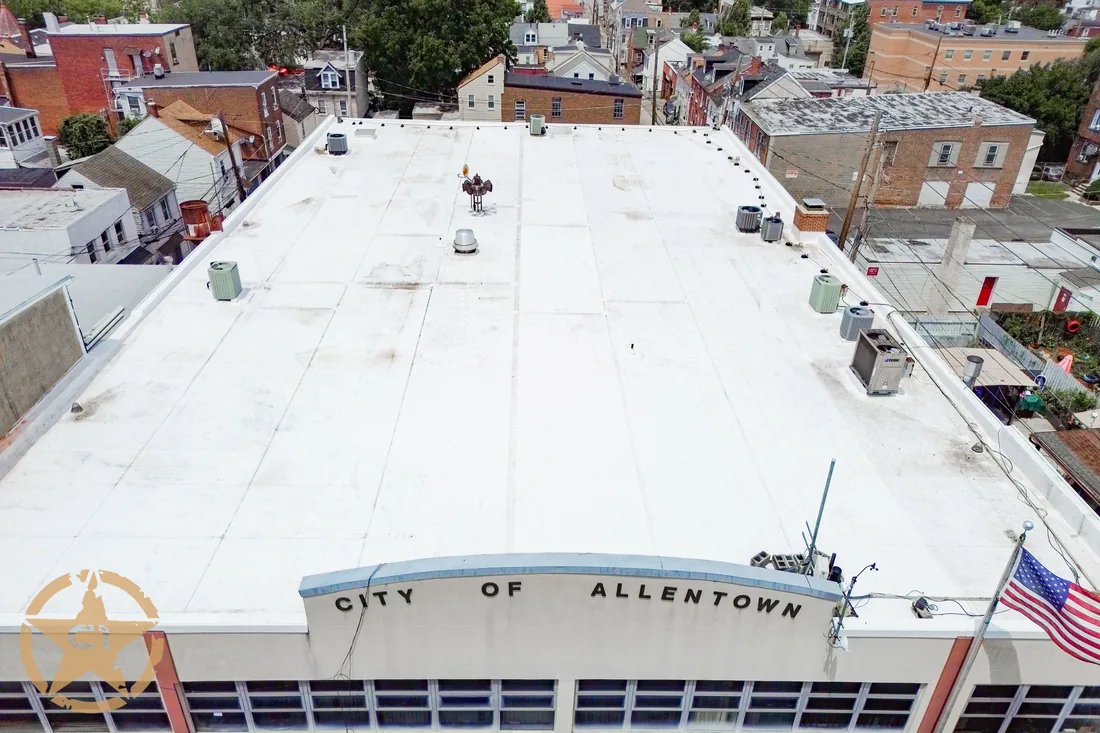
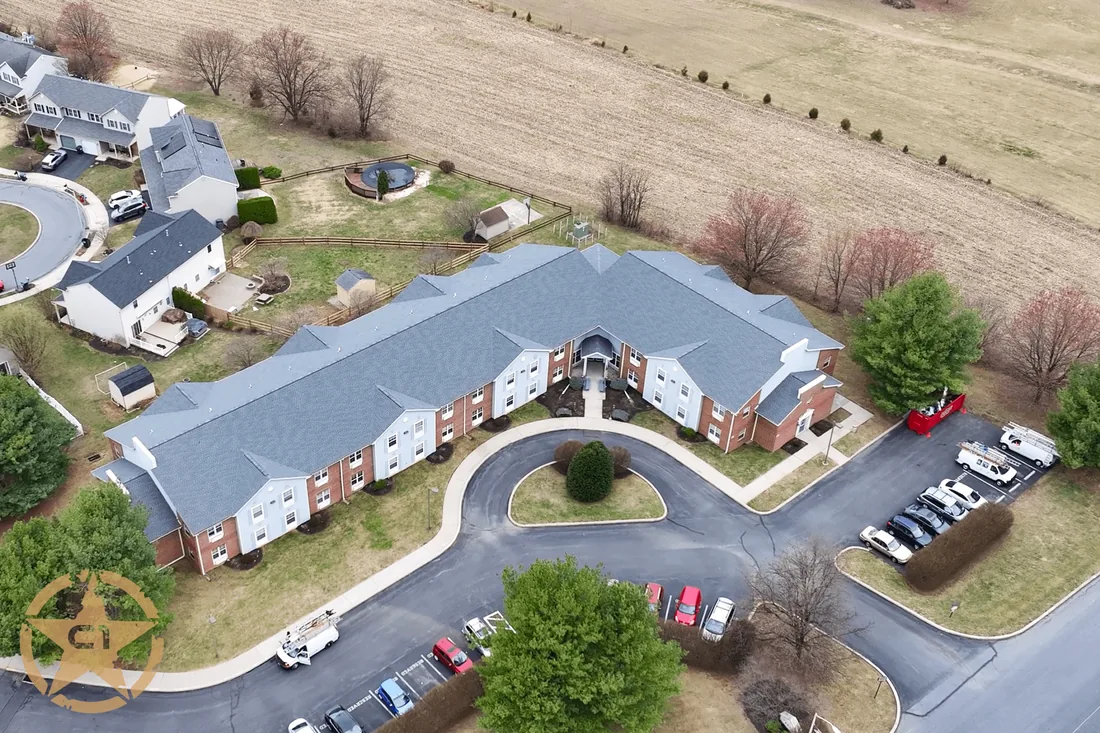
Commercial replacements across the Lehigh Valley, from a working municipal fire station to two school district buildings and a country club. Every one is a real building you can go and look at.


Commercial replacement questions
It depends on square footage, access and how much has to come off, and the schedule is written down before the start.
Phased work on an occupied building takes longer by design, because closing every night matters more than finishing quickly.
You get told, with photographs, before more work happens.
The scope states in advance what happens if wet insulation or bad deck turns up, so it is a known price rather than a surprise invoice.
Yes, and for school districts and municipal buildings that is often how it gets funded.
Sections get prioritised by condition so the worst area is done first rather than whichever is easiest to reach.
Yes, when there is storm damage to document.
Commercial claims run the same process as residential with bigger numbers, which makes the documentation matter more.
Free assessment with photographs, a written scope, and an honest answer on tear-off, recover or coating.